


In order to understand how to remove rust from a bicycle, it must first be said that despite the considerable evolution in terms of construction techniques and materials in recent decades, the classic “enemy”, rust, is always lurking. In fact, bicycles spend a large part of their lives outdoors and come into contact with smog, water, mud and dirt during use, whether for simple transport or for tourism and sport. This results in particular exposure to the risk of oxidation of metal parts. These can be initially protected in different ways: there are painted parts such as the frame, others which are chrome-plated (e.g. some handlebars or rims) and others treated in various ways.
However, as we all know, there is never a definitive barrier to the aggression of rust which, if the right measures are not taken, can attack even the best protected surfaces. This is why our maintenance activities must be developed along several lines: prevention and maintenance or repair and restoration of rusty parts. These measures must therefore be adapted to the situation of minor or major damage.
THINGS YOU’LL NEED
- Bike detergent
- Sandpaper
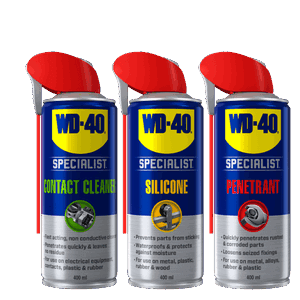
- WD‑40® Multifunction Product
- Metal brush
- Bike degreaser
- Angle grinder
- Abrasive paste
- Polish
- Microfiber cloths
- Chain lubricant
- Protective varnish
PREVENTION BEFORE UNDERSTANDING HOW TO REMOVE RUST FROM THE BICYCLE
It is essential to act preventively, starting from the day the new bike becomes available. After use in a wet and muddy environment, the main activities are washing (preferably with WD-40 Bike Cleaner) and drying. This essential action must always be followed by treatment of all the parts considered most at risk with a water-repellent and lubricating product such as WD-40 Multifunction that protects the metal from rust and corrosion, penetrates and lubricates jammed parts, eliminates and protects any surface from humidity. It removes grease, tar and glue stains from any non-porous surface. This applies even more so when garaging during an off-season break.
RUST ON EXPOSED METAL PARTS
Metal parts that are not protected by paint or other coatings are the most likely to rust. When the first signs of rust appear, do not delay because it will progress rapidly and cause increasingly serious damage. If the rust is a patina without any particular damage to the metal, it is advisable to use WD-40 Multipurpose as indicated above. If the rust has attacked deeper, it is advisable to use sandpaper no. 120-180, working repeatedly until the rust has been completely removed, before treating with WD-40 Multifunction.
RUST ON CHAIN, GEARS, SPROCKET WHEEL AND REAR HUB
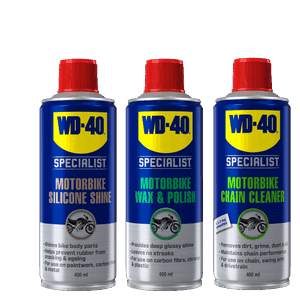
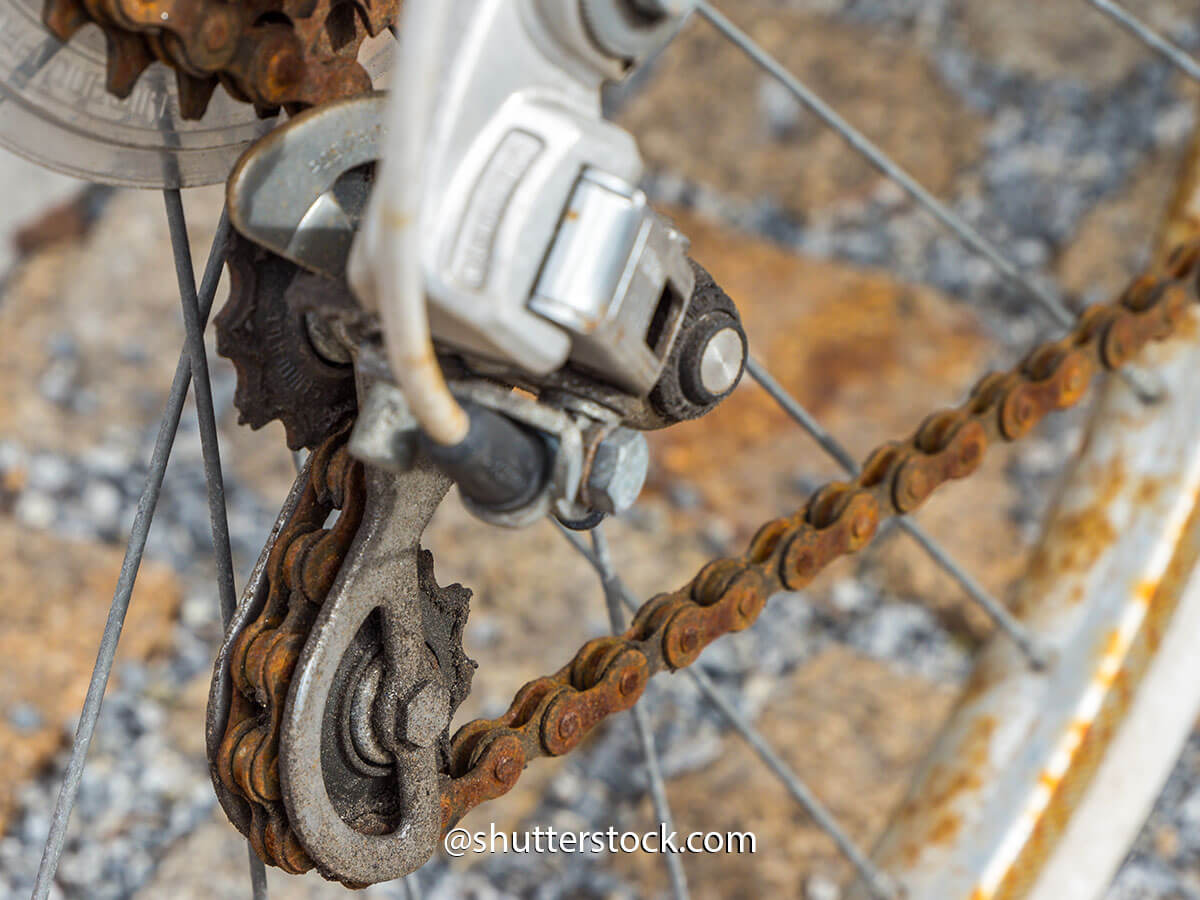
To understand how to remove rust from these parts of the bike, these must first be treated to remove hardened grease and sludge. This can be done by spraying the parts with WD-40 Bike Degreaser, which is solvent-based and acts quickly to remove grease, oil and dirt. It works on contact without leaving any residue and does not require rinsing. After drying, these parts can be treated with a wire brush passed over repeatedly, keeping the part to be treated wet with water, using a sprayer. When the rust has been completely removed, careful drying is required and the treatment is concluded with the application of WD-40 Multifunction, while on the chain it is advisable to apply WD-40 Specialist Chain Lubricant on both the rear and front parts. The product penetrates into the chain joints helping to protect in wet situations and creating a protective film that attracts less dust in dry situations.
RUST ON PAINTED PARTS OF FRAME
This is the situation that requires the most extensive work. It is necessary to remove the paint right down to the metal. This can be done either with sandpaper (no. 120-180) or with an angle grinder with an abrasive disc of the same grit. If paint removal has not lowered the metal level, a primer can be applied directly with a spray can (after masking with tape and paper whatever must not be reached by the spray). The primer must also be sanded with very fine emery paper (no. 600-800) until the surface is smooth and continuous. Then it must be cleaned with a cloth and the masking paper removed. When the paint is perfectly dry, two different finishes must be carried out: first, a coat of abrasive paste is applied with cotton and then removed with a cloth. Then a polish is applied and “pulled” with a microfiber cloth. The last step is to apply a layer of transparent protective varnish to the treated part, again in spray format, which makes the surface shiny and forms a barrier against the weather.
To follow all the news of WD-40 Africa, follow us on Facebook and Instagram !

