


Cleaning your car’s radiator is not overly complex, but requires particular attention. The radiator has the fundamental task of lowering the temperature of the engine coolant circuit. The coolant consists of a mixture of demineralized water and an anti-electro-protective substance. The proportion between the two liquids is usually 50-50%. Over time, this liquid gradually loses its antifreeze and anti-corrosion protection characteristics.
To prevent this from causing damage to the cooling circuit and the engine itself, it is advisable to periodically (at least once every two to three years) carry out simple external and internal maintenance of the radiator. During this time interval, the liquid may have become contaminated with oxides and other foreign elements drawn even to a minimal extent from the engine. If, however, there are suspicious signs such as water spots under the car, water temperatures that tend to rise above normal during motion, etc., maintenance is required immediately.
WHAT YOU’LL NEED
- WD-40 Specialist Fact-Acting Degreaser
- Brush with soft bristles
- WD-40 Multi-Use
- Parking stand
- Container
- Screwdriver
- Demineralised water
- Antifreeze
GENERAL VISUAL CHECK
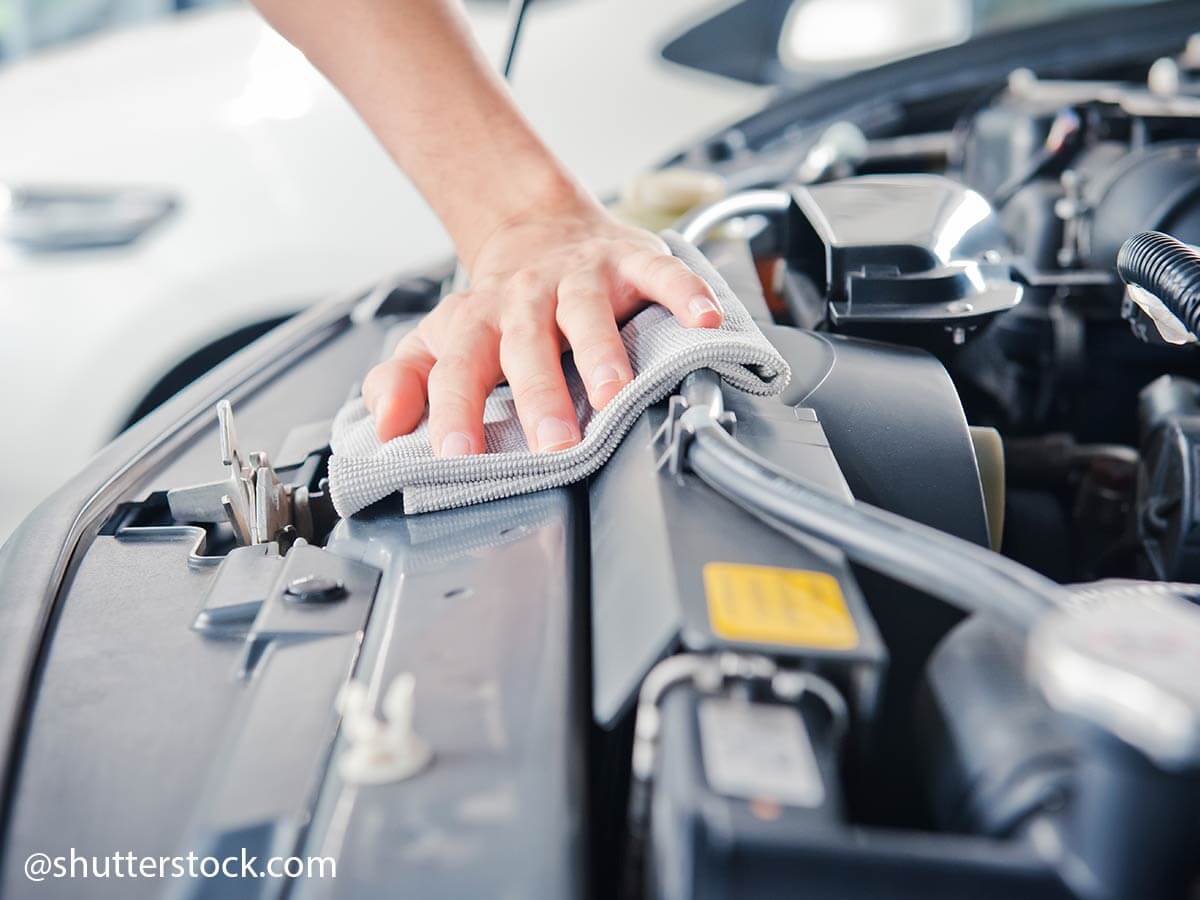
Before beginning to clean your car’s radiator, the entire engine compartment must be thoroughly cleaned with detergent liquids to eliminate any grease deposits that prevent an accurate inspection. WD-40 Specialist Fast-Acting Degreaser is ideal for this, as it dissolves sludge and various incrustations, which can then easily be removed with a cloth.
CHECK THE SLEEVES AND FRONT GRILLE
To clean your car’s radiator, first check the sleeves entering and exiting the radiator, and those going to the expansion tank and engine, checking that there are no leaks and that the relative clamps are tight. Use a brush with soft bristles to clean the thick lamination from the radiator front and remove debris and insects. This can be greatly facilitated with a few sprays of WD-40 Multi-Use. Don’t use too much force with the brush in order to avoid deforming the blades.
EMPTYING THE RADIATOR AND COOLING SYSTEM
Emptying the radiator requires a few preparatory steps. If possible, lift the car with safe and immovable systems (heels, thicknesses, parking stands, etc.) and place a large container under the engine. With the engine cold, remove the cap from the top of the expansion tank, and then check if there is a bottom outlet tap and any vent valves. The valves must be loosened and the tap opened. This allows the liquid to completely drain and be collected in the container. If there is no drain tap, disconnect the lower sleeve of the circuit. Loosen the clamp that keeps it tightened and remove it from the nozzle on which it is inserted.
WASHING THE RADIATOR
When all the liquid has been removed, close the lower tap (or reinsert the previously disconnected sleeve) and tighten the vent valves. Then fill the cooling circuit with demineralised water by pouring it into the expansion tank. Close the cap of the tank and start the engine, leaving it to run at a minimum for a few minutes. After turning off the engine and allowing it to cool down, repeat the previous operation, emptying out all the water used for washing into the container.
WASHING THE RADIATOR WITH CHEMICAL PREPARATIONS
If you notice that the water is particularly dirty, repeat the operation. There are special chemical preparations that can be added to the washing water to carry out robust descaling, but these are potentially aggressive and dangerous compounds: if you want to use them, it’s best to have a mechanic do it for you. If you act on your own, you must protect your body from any accidental contact with the product.
FILLING WITH WATER AND PROTECTIVE ANTIFREEZE
The last step to cleaning your car’s radiator is filling the circuit: check your car’s operation and maintenance manual, as each car needs a certain type of antifreeze. Using one randomly can cause serious damage to the engine. For the correct mixing percentage (always with demineralised water), check the instructions on the product. With the engine cold, pour the liquid into the expansion tank until it reaches the marked level. Then close the cap and start the engine, letting it run for a few minutes. If the liquid level in the tray decreases, top it up. To drain any air bubbles, press the various circuit sleeves several times with your hands.
To follow all the news of WD-40 Africa, follow us on Facebook and Instagram !

