


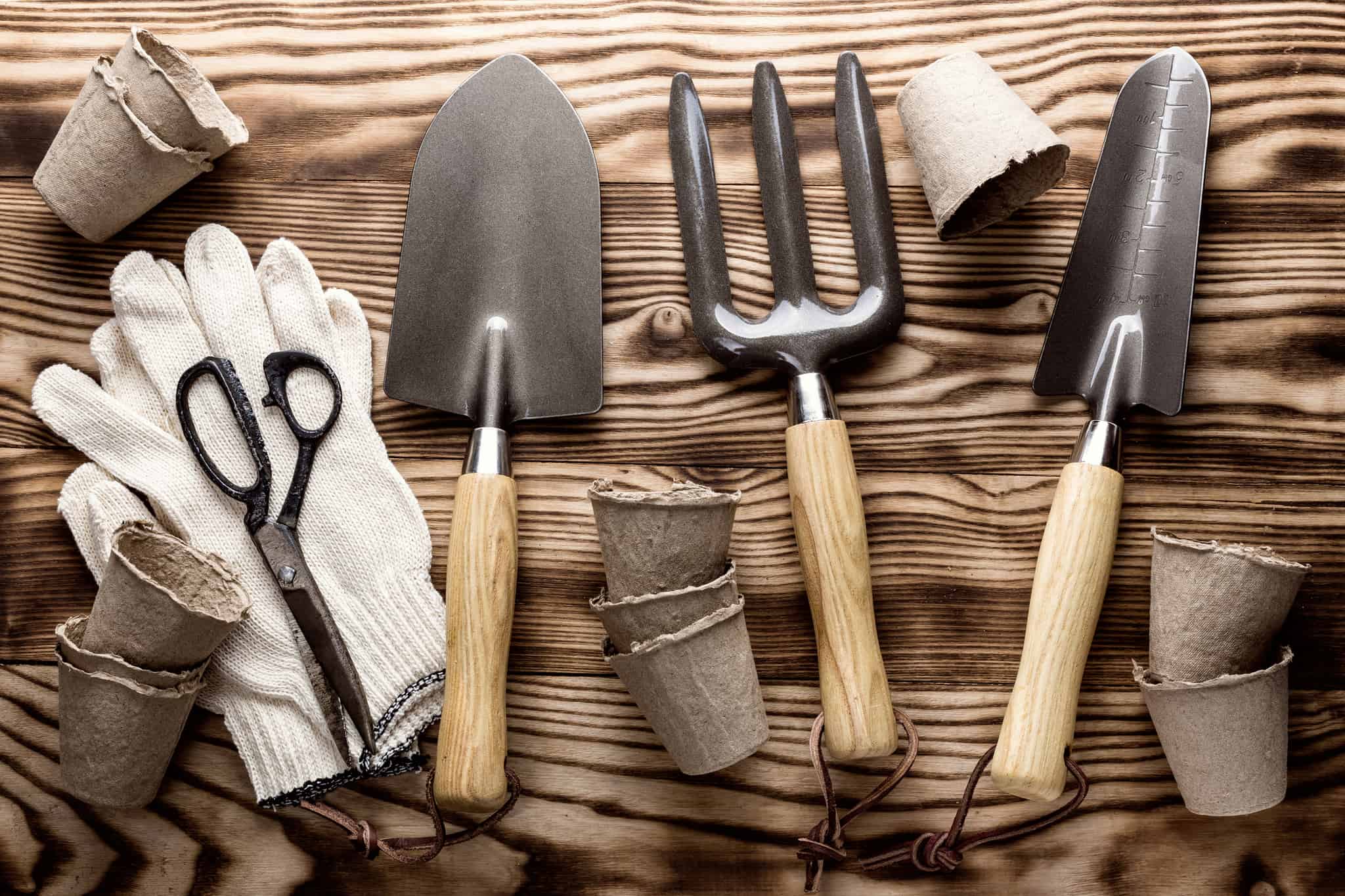
Gardening tools need regular cleaning, preferably after every use. However, they should be thoroughly cleaned especially when they are put away for winter after they have been used extensively in the summer. Garden work gets done more efficiently and effectively with clean garden tools, not to mention cleaner tools are easier to use and last longer. The question is, which tools need cleaning? The answer is simple. Any tool that has screws, nuts and bolts, chains, and/or blades will need cleaning regularly. This includes but is not limited to hedge shears, reel mowers, pruners, axes, loppers and more.
Here are some simple steps you can use to clean your garden tools to keep them functioning effectively for long.
Things you will need
Here are the tools you need to clean your gardening tools.
Cleaning Supplies: Garden hose, detergent, old rags and towel, sponge, sprayer
Cleaning Tools: Scrub brush, steel wool, wire brush, medium-grit, sandpaper
Lubricating: A lubricant to keep the cleaned tools protected from moisture, rust and corrosion
Safety Equipment: Eye protection, gloves and dust mask
Step 1 – Clean the Tools
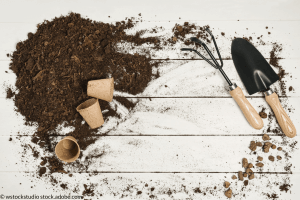
The first step for cleaning gardening tools is getting rid of all the dirt accumulated over them. Sap and dirt left on garden tools can cause weeds as well as a number of soil borne diseases. Dirt also attracts moisture and holds it which leads to quick spreading of rust. If your garden tools have moving parts, make sure you disassemble them first before cleaning. Using a wire brush, clean the dirt and rust from all the metal surfaces. You may use steel wool to remove more stubborn rust. If there are some large tools, you can also use a medium-grit sand scraper. Also make sure you thoroughly dry all the tools to prevent any build-up of moisture.
Step 2 – Sand the Tools
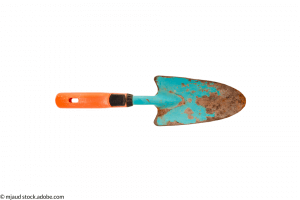
The second step is smoothing out all the wooden handles using a medium-grit sandpaper. This will help in removing splinters from the machine and getting rid of the deteriorated finish. A sandpaper can also be used to remove any rust that might still remain on the crevices and surfaces. This will also lightly polish the metal. Once you are done, wipe the tools to remove any metal or wood sanding remaining on the tools.
Step 3 – Sharpen the Pruners
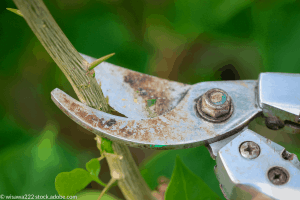
The next step after you are done with cleaning the tools of any rust and dirt is sharpening them. Try as much as you can to maintain the original angle or bevel while sharpening. If there are pruners in your garden, you can use a whetstone to get a sharp cutting edge. Rub the bevelled side of the blade against the whetstone and with a curved motion, rub the sharp edge of the blade towards the stone. You should first remove the burrs from the flat surfaces and then go on and sharpen the bevelled side of the blade only.
It is important to sharpen the tools at the end of every season to keep them functioning for long.
Step 4 – Lubricate the Tools
This is one of the most important steps when it comes to cleaning garden tools and keeping them safe from moisture, rust and corrosion. The best product to lubricate the garden tools is WD-40 Multi-Use-Product. Using this lubricant will prolong the life of your garden tools ensuring efficient performance every single time. It keeps the garden tools protected from rust and corrosion all year long.
Preventive Maintenance
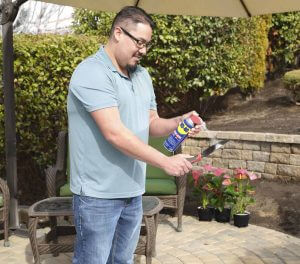
Now that you are done with cleaning your garden tools and they look as good as new, take some time out every couple of months to keep them that way. Here are some preventive maintenance tips to help keep your garden tools working efficiently for long.
- Rinse off mud using a garden hose every time you use the garden tools. Wet soil clung to the tools is one of the main reasons of the rusting of garden tools.
- Use a scrub brush to quickly scrub away any stubborn soil. You can also use a paint thinner to remove pitch and sap.
- Use a towel or rag to wipe the tools dry before keeping them in the storage. You can also let them dry on their own by keeping them in the sun.
- Don’t stand the tools on their edges, hang them up instead
- Wipe the surface with lubricants like WD-40 Multi-Use-Product periodically to keep them safe from rust and corrosion
Garden tools should be cleaned after every use, but if you don’t get the time to do it every day, make sure they are cleaned at least once every couple of weeks. This will prevent the accumulation of dust and moisture on them, which leads to corrosion and rust. The life of your garden tools will be extended if you clean them regularly. Cleaning alone is not enough for the long life of garden tools, make sure you also lubricate them to keep them safe from environmental factors that cause their wear and tear and corrosion. Also keep in mind that garden tools after cleaning should be stored in a dry place which is free of moisture. With all these steps, we are sure your garden tools will have a long life and you will be able to use them for years. And, the best part, gardening using clean tools is more relaxing. Wishing you all happy gardening.

