


Constant maintenance of your sewing machine is absolutely essential in order to keep this complex tool in excellent conditions, as it is full of robust but at the same time delicate mechanisms whose operation must be perfectly synchronised.
There are a few basic rules: the first is to carefully read the instruction manual, which always contains good maintenance instructions.
A few rules that must always be respected are:
- Always keep it perfectly clean, especially the basket and crochet.
- Lubricate its mechanisms when it makes noises or squeaks during operation.
- Buy and use only quality thread suitable for the sewing machine. Low-quality thread not only tears easily but also forms knots and flakes.
- Use multiple bobbins, don’t always use the same bobbins for different jobs.
- Replace the needles quite frequently because, even though invisible to the naked eye, they wear out and stop sewing perfectly, fraying fabric and producing lint which creeps between the mechanisms.
- Of course, needles adapted to each specific fabric and thread must always be used.
Sewing machine needles typically have a colour coding that lets you quickly identify the right type.
Cleaning the crochet compartment
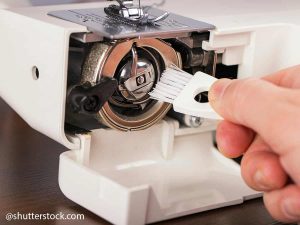 This is definitely the main maintenance activity. The goal is to clean the crochet compartment (located immediately below the needle holder shaft) of lint and debris that have inevitably accumulated during operation.
Depending on the model, you may have to unscrew the screws or activate some type of opening mechanism. Gently remove both the bobbin and the crochet. Then with a soft brush (often supplied), remove all visible residue with a vacuum cleaner or a spray of compressed air. Cans of compressed air are very practical for this task.
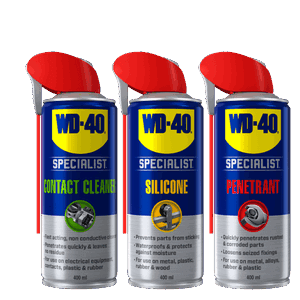
The central axis of the bobbin must be lubricated with one to two drops of specific oil for sewing machines or with a few drops of WD-40 Specialist High-Performance PTFE Lubricant. Then reinsert the crochet and bobbin and close the compartment.
 Cleaning inside the sewing machine
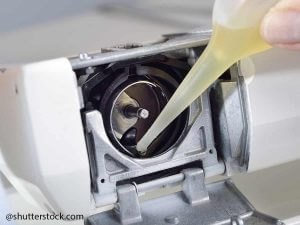 Cleaning inside the sewing machine
If you use your machine frequently, we suggest bringing it to a specialised centre at least once a year for more in-depth maintenance.
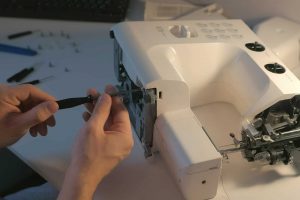
However, anyone with a certain skill and experience can open the body to reach the internal parts with different movement mechanisms. A wide-range spray of WD-40 Multi-Use on all the mechanisms helps facilitate the parts’ movement and removes any layers of foreign material that may have deposited on them.
The machine must be stored in a clean, dry place and at a moderate temperature to avoid any thermal changes that interfere with the activity of the lubricants and the mechanisms’ movement.
When used for the first time after lubrication or after a long period of non-use, run the sewing machine for a few seconds while empty (without a needle and thread) to allow the lubricants to better distribute on the mechanical components.
Foot pedal care
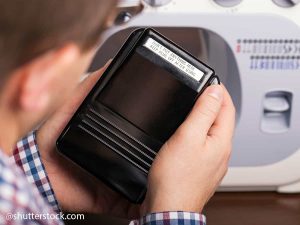 Foot pedal care
The sewing machine is operated using a pedal that acts as a switch and speed regulator, so that the operator always has both hands free to work.
If you like, you can open the pedal switch to access it inside and free it from any accumulated dirt and dust (since the pedal “lives” on the floor), checking and lubricating the spring mechanism that allows it to be operated with the foot. Any electrical contacts inside it, if easily accessible, should also be treated with WD-40 Specialist Contact Cleaner, which cleans them and improves their contact quality.
To follow all the news of WD-40 Africa, follow us on Facebook and Instagram !

